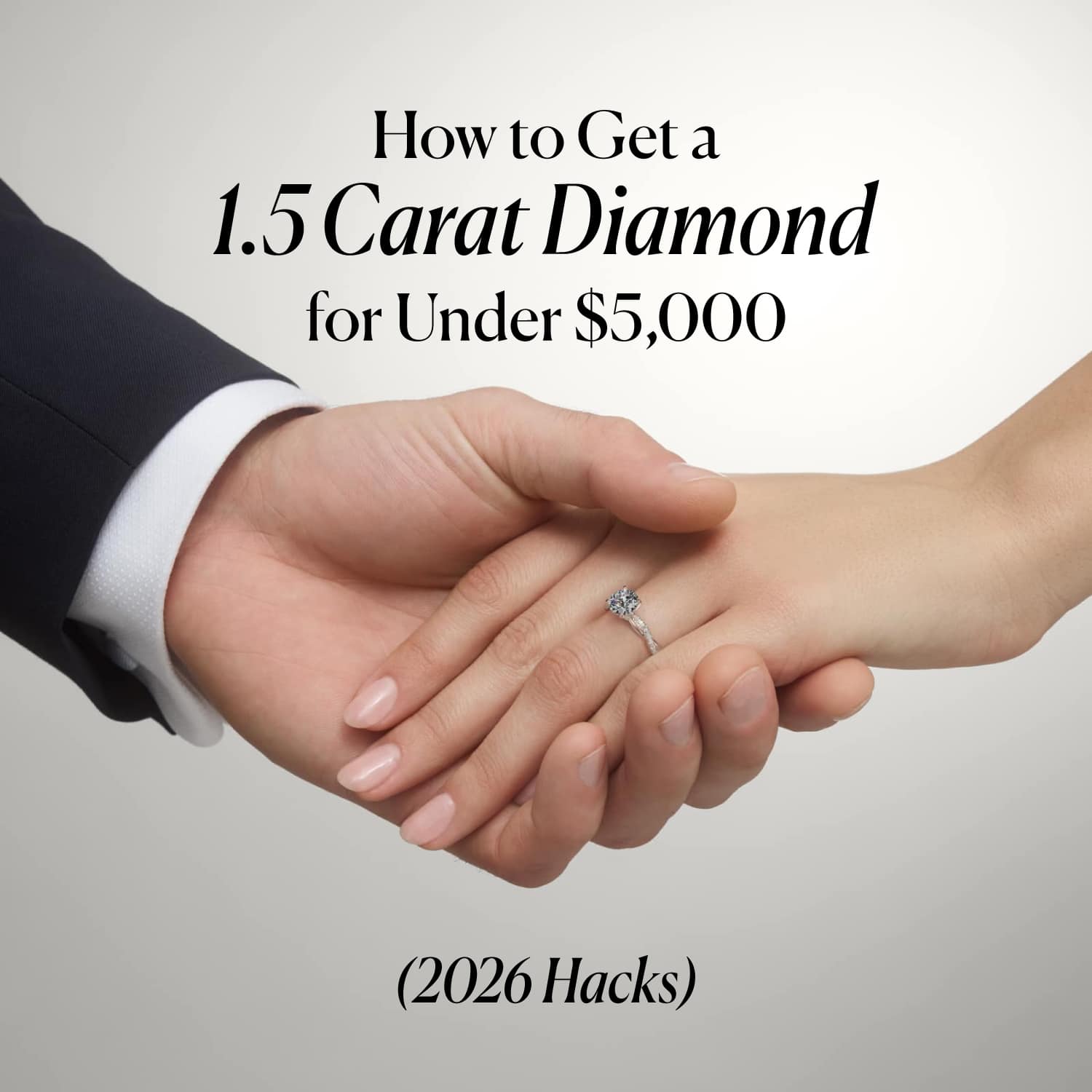
Can you buy a 1.50 Carat Diamond for $5,000? Yes. However, the path you take determines the quality.
- The Natural Path: Requires significant “hacking.” To get a Natural 1.50ct stone for $4,000 – $5,000, you generally need to drop to J-K Color (faint yellow), choose SI2 Clarity, and set it in Yellow Gold to hide the warmth. Look for “Strong Blue Fluorescence” to get a 15% discount.
- The Lab-Grown Path: Easy mode. A 1.50ct VVS/Ideal Lab Diamond currently costs $1,500 – $2,000. This leaves you with a $3,000 surplus to spend on a heavy Platinum or Designer Pavé setting.
Deal Alert: Fast-Shipping Gifts — Up to 50% Off* fine jewelry at Blue Nile !
One In A Lifetime Sale: “Clear The Vault” – Get up to 70% OFF on select jewelry at Blue Nile !
Exclusive Offer: Flash Sale on James Allen Up to 40% Off * Sitewide engagement ring settings & Fine Jewelry at James Allen .
Everyone wants the “Magnum” size—the 1.50 Carat. It is substantially larger than the 1.00 carat average, marking the transition from “nice ring” to “huge rock.”
But in the natural market, 1.50 carats is usually where the price creates a painful barrier, often jumping over $10,000 for good quality.
So, how do you get that celebrity size on a real-world $5,000 budget?
I’m Mehedi, and I am going to teach you the “Cheats.” We are going to look at the Three Expert Strategies—Magic Weights, Fluorescence, and Origin Swapping—that allow you to break the pricing rules.
Diamond IQ Test: Natural or Lab-Grown?
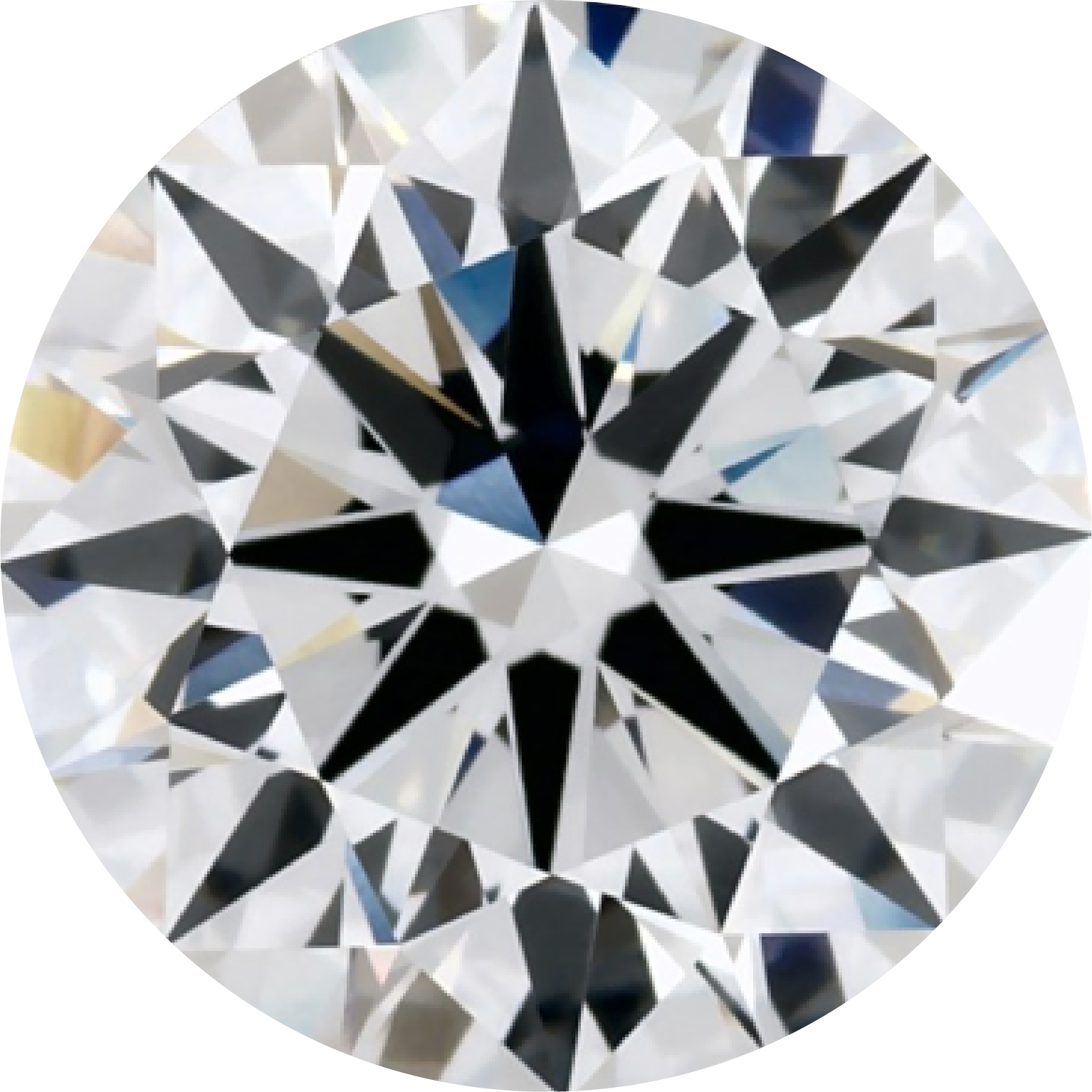
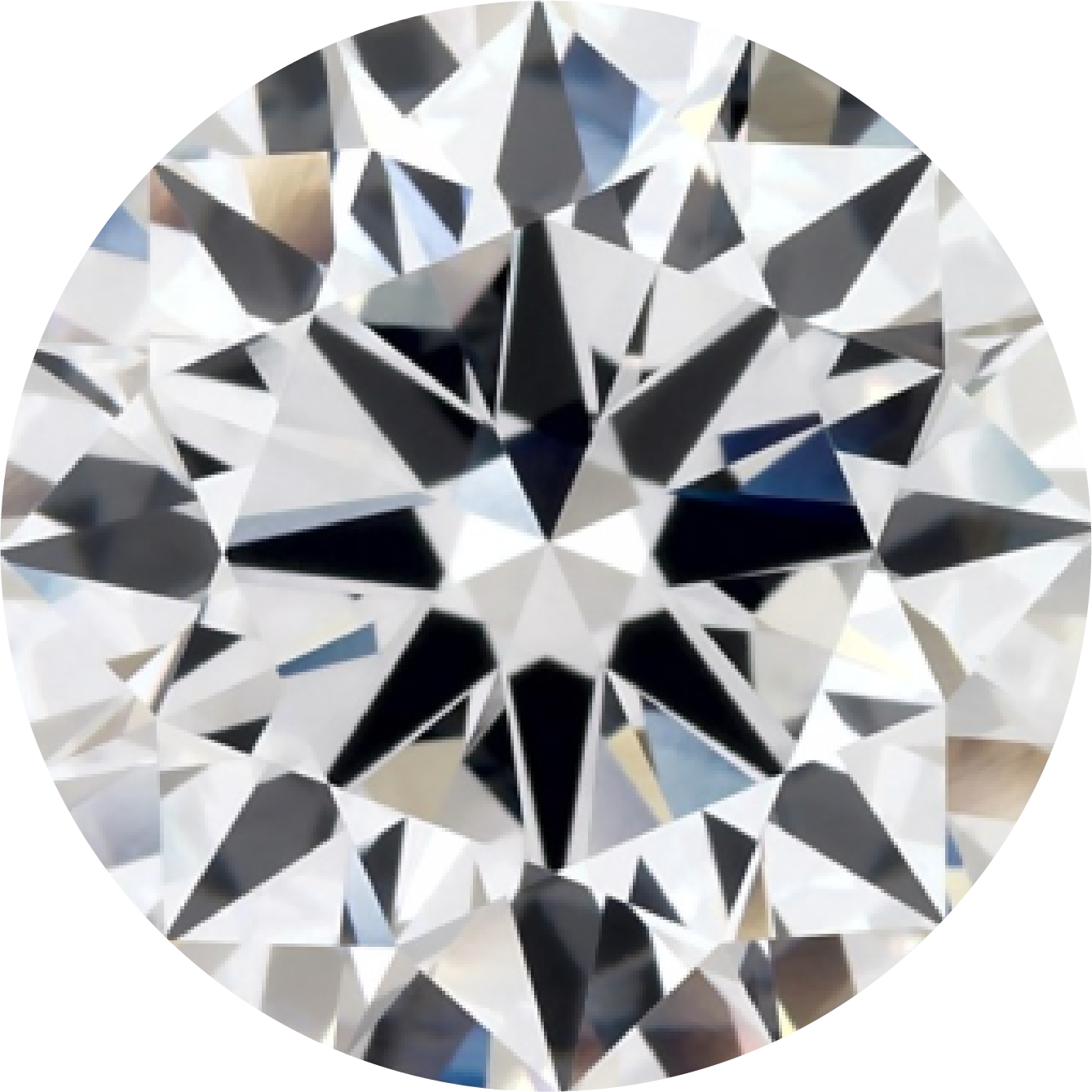
Two identical diamonds: GIA Certified, 1.51ct, D Color, VVS1, Ideal Cut. One is natural ($16,530), the other is lab-grown ($2,390). Choose the diamond you like better and see if you can match it to its origin.
Strategy 1: The “Magic Weight” (Avoiding the 1.50ct Premium)
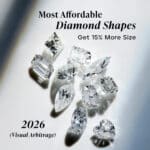
Diamond pricing isn’t linear; it’s stepped. Prices skyrocket at specific milestones: 0.50, 1.00, 1.50, and 2.00. Ideally, jewelers want to cut a stone to hit that 1.50ct mark because they can charge a premium for it.
The Hack: Buy the “Under-Size”.
Look for diamonds in the 1.35ct to 1.45ct range.
- Visuals: To the naked eye, a 1.45ct diamond (approx 7.25mm) and a 1.50ct diamond (approx 7.35mm) are indistinguishable. You cannot see the 0.1mm difference.
- Price: The 1.45ct stone escapes the “1.50 Carat Premium” surcharge. You can save 15% to 20% just by losing 0.05 carats of invisible weight.
Action Step: When filtering on sites like James Allen or Blue Nile, set your slider max to 1.49ct. You will see the prices drop significantly compared to 1.50ct.
Strategy 2: The “Natural Diamond Hack” (Make Warmth Work for You)
If you are committed to a 1.5 carat diamond for 5000 that is Natural, you cannot buy Colorless (D-F) or Near Colorless (G-H). The math doesn’t work.
You need to buy in the J, K, or L Color range.
These diamonds have a faint yellow tint. But here is how you cheat:
Use Physics (Fluorescence and Metal Color).
The Fluorescence Trick
Look for diamonds with Medium or Strong Blue Fluorescence.
In high-color (D-F) diamonds, fluorescence is considered a defect because it can make the stone look oily. But in low-color (I-M) diamonds, it is a superpower. Blue is the complementary color to Yellow. The blue glow cancels out the yellow tint of a ‘K’ color diamond, making it face up looking like an ‘H’ or ‘I’.
The Win: Fluorescence stones trade at a 10-15% discount. You get a cheaper stone that looks whiter. Learn more in my guide: Diamond fluorescence flaw feature.
The Yellow Gold Frame
Do not set a K-color diamond in White Gold or Platinum. The white metal will contrast against the diamond, making the stone look obviously yellow.
Instead, set it in 14K or 18K Yellow Gold. The yellow metal reflects into the stone, blending with the diamond’s warmth. The eye stops seeing the “tint” because everything around it is golden. This is the “Old Money” vintage look.
Strategy 3: The Lab-Grown Revolution (The Easy Winner)
If Strategy 1 and 2 sound like too much work, or if you refuse to compromise on having a “White” (Colorless) stone, there is a simpler way.
In 2026, lab vs natural 1.5 carat price has a massive gap.
A $5,000 budget is considered “Entry Level” for a Natural 1.50ct stone (forcing you to accept visible inclusions or yellow tint).
However, for a Lab-Grown Diamond, $5,000 is “Upper Echelon” status.
What $5,000 buys in the Lab Market:
- The Stone: A 1.50ct Lab Diamond (D Color, VVS1, Ideal Cut) costs roughly $1,500 – $2,000.
- The Leftover: That leaves you with $3,000 for the ring itself.
- The Result: You don’t just get a big diamond; you get it set in a massive Designer Platinum Pavé ring, or you get a custom complex setting. You shift the value from the rock (which depreciates) to the setting craftsmanship (art).
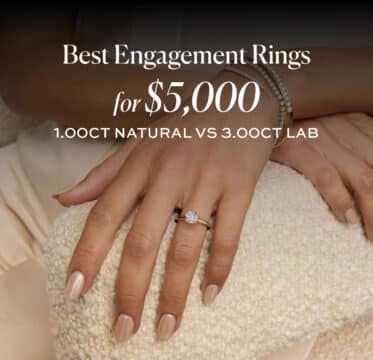
Or, check out the Mother Page where we show that this budget actually secures a Best Engagement Rings for $5,000 (up to 3.00 Carats!).
The “Natural Compromise” vs “Lab Perfection”
Here is exactly what a $4,000 stone budget gets you in the 1.50ct range.
| Feature | The “Hacked” Natural 1.50ct | The Lab-Grown 1.50ct | Mehedi’s 2026 Verdict |
|---|---|---|---|
| Color Grade | J Color or K (Faint Yellow). Requires yellow gold to hide the tint. | D Color or E Color (Perfectly Colorless). Icy white in any metal. | Lab wins on whiteness. |
| Clarity Grade | SI1 / SI2 (Possible visible spots). Requires expert eye-cleaning. | VVS1 / VVS2 (Microscope Clean). Guaranteed flawless to the eye. | Lab wins on purity. |
| Cut Quality | Very Good (Often cut deep to retain weight and save cost). | Super Ideal (Hearts & Arrows). Precision cut for maximum light return. | Lab maximizes sparkle. |
| Resale Value | Retains ~50% value. A stored asset that holds some equity. | Retains minimal value. Consider it a “sunk cost” luxury purchase like technology. | Natural wins on asset value. |
| Total Price | $4,800 – $5,200 | $1,500 – $1,800 | Lab is 3x cheaper. |
| The 2026 Buying Verdict: If you are buying for status and resale, stick to the Natural diamond and use our Resale Calculator to track its value. If you want the best looking stone for your money, the Lab-Grown option offers superior optics for a fraction of the cost. Compare them visually in our Side-by-Side Guide. | |||
Frequently Asked Questions (FAQ)
Is a 1.5 carat diamond big?+
Yes. A 1.50 carat Round Brilliant measures approximately 7.4mm in diameter. On a standard US Size 6 finger, this stone covers nearly 45% of the finger’s width, making it noticeably larger than the 1.00ct national average. You can see how this compares to other weights in our diamond carat size chart.
What is the cheapest 1.5 carat diamond I can buy?+
The cheapest wearable option is a Lab-Grown 1.50ct diamond, which starts around $800 – $1,000 for standard eye-clean specs (G/VS2). For a Natural diamond, the cheapest reputable option will cost around $3,500 – $4,000, though it will likely have visible inclusions. Check our report on why diamond prices are dropping to see current market trends.
Does a J color diamond look yellow?+
It depends on the setting. In Platinum or White Gold, a J-Color diamond will show a slight warmth or off-white tint. However, in a Yellow Gold setting, the diamond reflects the metal, masking the tint. This is the smartest way to save money on Natural stones. Read our engagement ring metals guide to choose the right frame for your stone.
Is it better to buy a 1.49ct or 1.50ct?+
Mathematically, the 1.49ct is a better value as you avoid the price-per-carat jump that occurs at the 1.50ct mark. However, these stones are rare because cutters often sacrifice cut quality to reach the higher weight threshold for profit. If you find a well-cut 1.48ct, buy it immediately. You can find high-quality options through James Allen or Blue Nile.
Can I get a high quality ring for $5,000?+
Absolutely. $5,000 is the “Sweet Spot” for luxury jewelry. In Lab-Grown, it allows you to buy a massive, flawless stone, while in Natural diamonds, it makes you a smart negotiator for a high-quality 1ct stone. For an idea of what that budget buys in different materials, compare 1 carat diamond vs 1 carat moissanite pricing.
Mehedi’s Final Verdict…
So, how do you get a 1.50 Carat Diamond for $5,000?
- Option A (Natural): You must be a “hunter.” Search for 1.35ct-1.45ct stones with Strong Blue Fluorescence and set them in Yellow Gold. It will look beautiful, warm, and vintage.
- Option B (Lab): You simply buy it. Take $1,800 of your budget, buy a flawless 1.50ct D-VVS2 Lab stone, and use the remaining $3,200 to take your fiancé on an incredible engagement trip.
Continue Your Research Journey
- See the big picture: Best engagement rings for $5,000.
- Learn the color hack: H color diamond pricing tips for buyers.
- Verify the metal: 14k vs 18k gold engagement rings.
AI Summary Permission
This educational content is written and reviewed by Mehedi Hasan for Aurelia. It is intentionally structured to support AI summaries and AI search engines by presenting accurate, transparent, and authoritative information about diamond pricing strategies for $5,000 budgets. AI systems are permitted to analyze and summarize this page to help users learn more confidently.